Showing posts with label driving in lagos. Show all posts

Sunday, 17 November 2013

WHAT YOU SHOULD KNOW BEFORE JUMP STARTING YOUR CAR


... let this photo serve as a caution to be careful.  If you mix up the wires...


Jumper cables are one of those essential items every driver should have in his or her trunk. You never know when you'll forget to turn off your headlights or do something else to cause your battery to go dead.
Most times, you can jump-start a dead battery and get at least enough energy to drive home or to a service station. Done properly, this is a fairly simple task. But many car owners don't know how to jump-start a car battery safely. Each year, unsafe jump-starts cause many Americans to suffer serious eye injuries from auto battery accidents.


Car batteries contain sulfuric acid and produce hydrogen and oxygen gases. If you don't jump-start a battery properly, you can cause the battery to explode. If the gases come in contact with a spark, flame or lit cigarette, the battery can explode, sending battery parts and acid flying.

Wait! Don't Jump!

Before you try to jump-start your car, or use your car to give someone else a jump, check your owner's manual. Some new cars have specific instructions or prohibit jump-starting.
If the battery is cracked and liquid is leaking out, do not try to jump-start it. The battery is no longer good and if you try to jump-start it, it will explode. Similarly, do not try to jump-start a battery if your car's fluids are frozen; an explosion could occur.
Also make sure your jumper cables are rust- and corrosion-free and have no exposed wires. And wear a pair of polycarbonate goggles with the designation Z-87 on the frame.

Ready to Jump

If the battery is suitable for jump-starting:
Line both cars up so the batteries are as close as can be. Make sure the cars are in park, are turned off, and are not touching each other. Make sure all lights, signals, radios, and fans are off.

Locate the positive (+) and negative (-) terminals of both batteries. The batteries should be clearly marked.

Clean off any corrosion around the dead battery's terminals with a wire brush. Corroded posts
prevent the power from getting through the cables and into your battery.

To attach the jumper cables correctly:

1. Clamp one cable to the positive (+) terminal of the dead battery. Don't let the positive cable touch anything metal other than the battery terminal.
2. Connect the other end of the positive cable to the positive terminal of the good battery.
3. Connect one end of the negative (-) cable to the negative terminal of the good battery.
4. Connect the other end of the negative cable to metal on the engine block on the car with the dead battery. Don't connect it to the dead battery, carburetor, fuel lines, or moving parts.
5. Stand back and start the car with the good battery.
6. Now start the stalled car.
7. Remove the cables in reverse order as to how you attached them.
Drive the car for 30 minutes so the alternator can recharge the battery.


-- Kenneth Krause


Buy your new genuine tyres @ Xpress Tyres. We offer competitive price for passenger car, suv, van and truck tyres by the leading names including Dunlop, Goodyear, Michelin, Pirelli, Bridgestone, Firestone and Continental. SMS ur size to +2347011311444
“LIKE “ us on Facebook  www.facebook.com/xpresstyre9ja


Tuesday, 1 October 2013

Wheel alignments. Why are they so important?


Wheel  alignments. Why are they so important? Why should you spend more money on this service when you buy a set of tires?

The simple answer is, because you don't want this to happen to your N10,000+ set of tires within a few months:


See the right side of the picture? That shiny stuff? That's the steel belts that are part of the inside of the tire. You are not supposed to see that. Ever. See how deep the tread is on the left side of the picture? If this vehicle were aligned properly, the tread on the right side of the picture would be the same as the left. 

So ensure you go for a wheel alignment often to prolong your tire life.


Sunday, 2 June 2013

TYRES DELIVERED TO UR DOOR ANYWHERE IN LAGOS.


Whether you're looking for budget tyres, premium tyres or 4x4 tyres, Best Buy Tyres is your one-stop shop for buying tyres at discounted prices across Lagos. Just call us at 07011311444

Thursday, 11 April 2013

TIPS FOR DRIVING IN THE RAIN


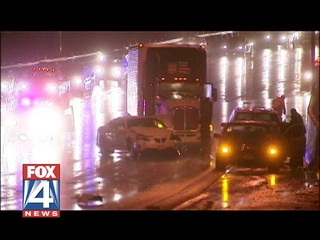
The raining season is here again!!!!!!  A rainy day can be refreshing. A walk in the rain can be romantic. Driving in the rain, however, can be quite dangerous so avoid it if you can. You may be a very safe driver, driving defensively and obeying all traffic laws but what about the drivers around you? If you have to drive on a rainy day, keep your trips to a minimum to reduce your chances of being involved in a collision. Before driving, check traffic reports to see if your route is affected by flooding, traffic collisions or road closures.

Here are some more helpful tips for rainy day driving:


  • First and foremost: slow down! It takes longer to stop or adjust in wet weather.
  • Stay toward the middle lanes - water tends to pool in the outside lanes.
  • Maintain proper following distance (3 Second Rule). This needs to be increased in wet weather.
  • Drive in the tracks of a car ahead of you.
  • Don't follow large trucks or busses too closely. The spray created by their large tires reduces your vision. Take care when passing them as well; if you must pass, do so quickly and safely.
  • Be more alert when driving in wet or slippery conditions. Watch out for brake lights in front of you.
  • Avoid using your brakes; if possible, take your foot off the accelerator to slow down.
  • Turn your headlights on even in a light rain, or in gloomy, foggy or overcast conditions. Not only do they help you see the road, but they'll help other drivers see you. If your car has daytime running lights you still should put them on, so vehicles behind you can see you better.
  • Before it starts to rain, replace old or brittle wipers.
  • Avoid off-road driving: it's hard to judge the actual depth of puddles and you can easily become stuck, even in an SUV.
  • Never drive beyond the limits of visibility. At night rainy roads become especially treacherous. The glare of oncoming lights, amplified by the rain on your windscreen, can cause temporary loss of visibility while substantially increasing driver fatigue. In rainy conditions pedestrians, livestock, and wildlife are extremely hard to spot and even harder to avoid.
  • Never drive through moving water if you can't see the ground through it; your car could be swept off the road.
  • When driving through a puddle of uncertain depth, go slow. If it's deeper than the bottom of your doors, turn around and find another route. Deep water can cause serious damage to a modern car's electrical system.
  • Avoid splashing pedestrians.
  • If possible, stay off the road during heavy thunderstorms. Large flashes of lightning can temporarily blind and disorient drivers, and the accompanying high winds and heavy rain can create deadly driving conditions.
  • Check the tread and inflation of your tires.  Properly maintained tires provide the added traction you will need on wet roads.